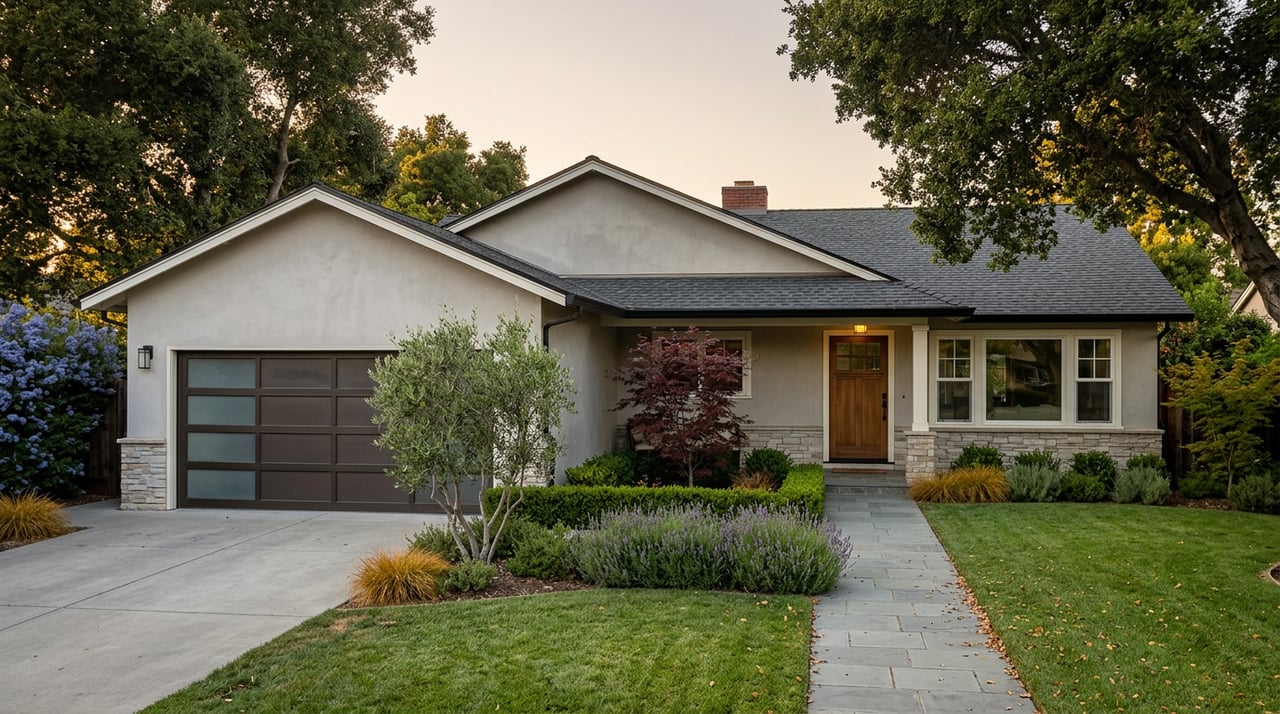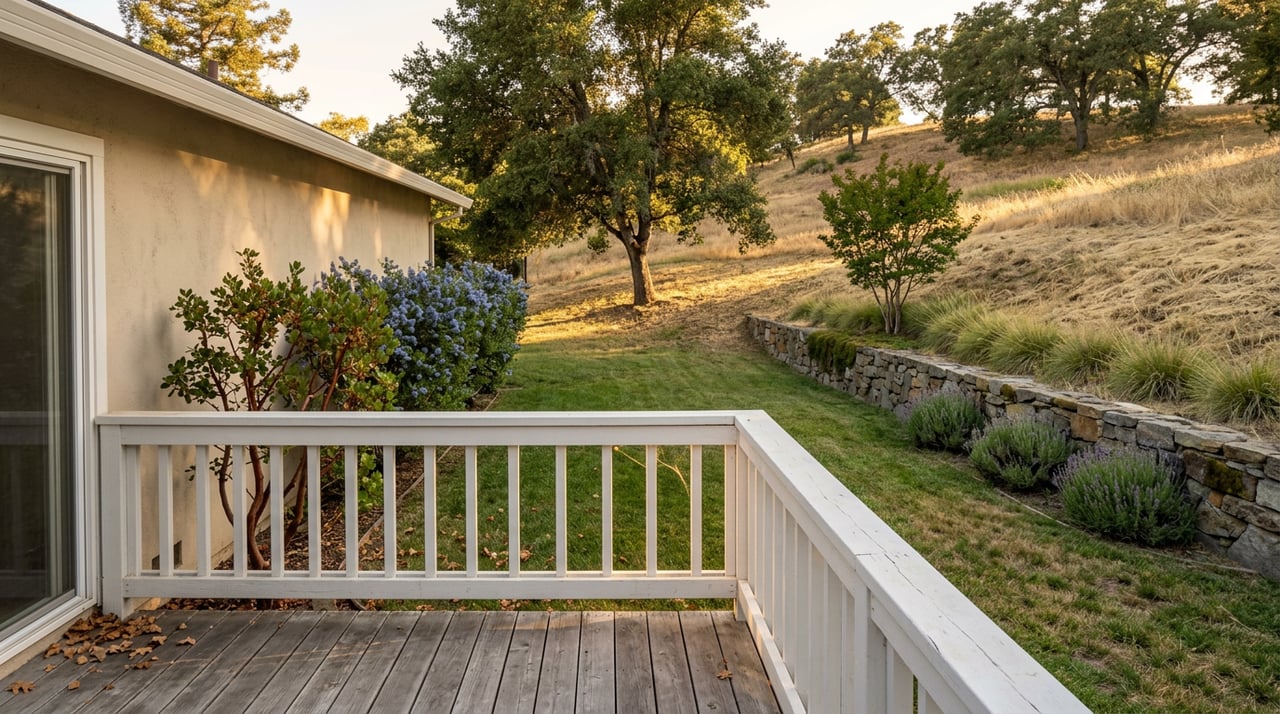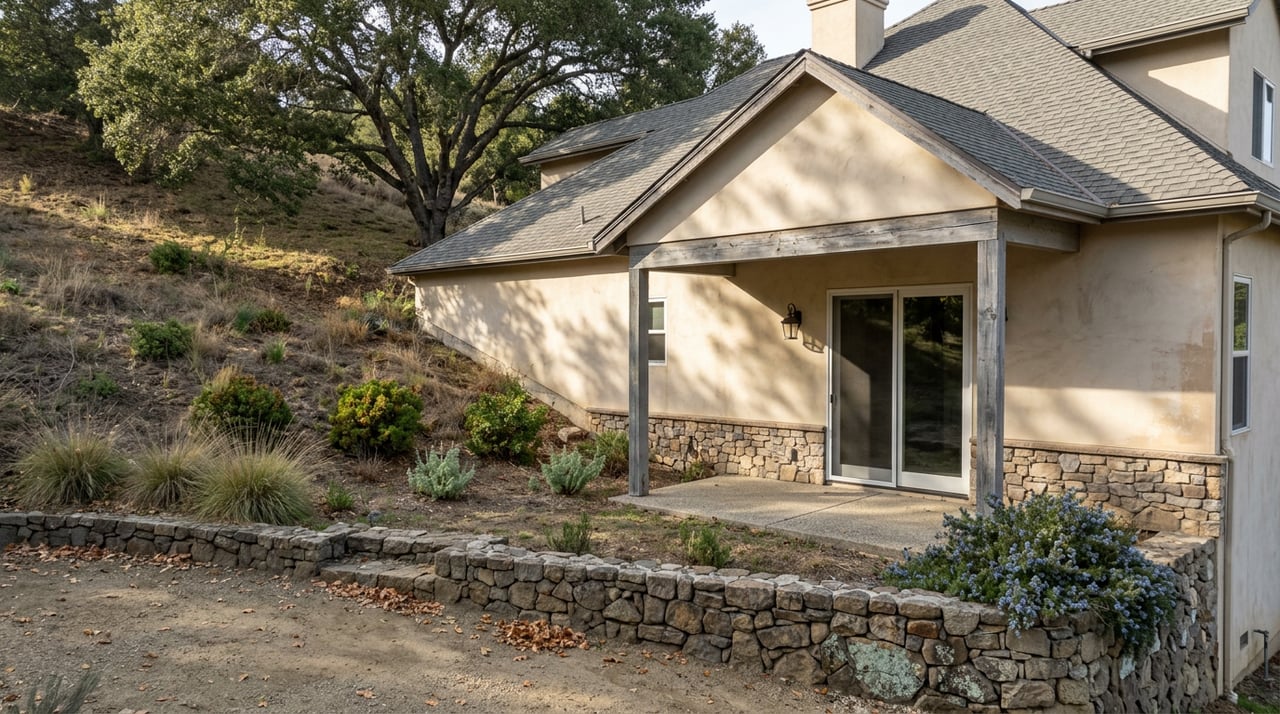
Picture two ranch-style homes on Alamo Heights Drive, both listed within the same season. Both owners had done what responsible hillside homeowners in Alamo do every spring: cut back the dry grass, thinned the brush along the fence line, kept the woodpile clear of the house. Both would tell you, honestly, that their defensible space was in order.
Only one of them would be able to close on schedule.
The other would spend weeks waiting on a piece of paperwork nobody told them to request until their agent asked for it, deep into the contingency period. That gap between "I do my fire safety work" and "I can prove it to the fire district at the exact moment I'm selling" is the thing almost every Alamo hillside seller misses, and it has nothing to do with how well-tended the property actually is.
Two Different Obligations, One Confusing Overlap
Every parcel inside the San Ramon Valley Fire Protection District, which covers Alamo along with Blackhawk, Danville, Diablo, and San Ramon, is subject to an annual exterior hazard abatement requirement. The deadline is June 1 every year, and it covers the routine stuff: overgrown grass, weeds, brush, dry shrubs. Inspections start the first weekday of June. If you've lived in Alamo for more than a season, you already know this rhythm.
That is not the same thing as what California Civil Code Section 1102.19 requires of a seller. Since July 1, 2021, state law has required anyone selling a home in a high or very high fire severity zone within a State or Local Responsibility Area to hand the buyer documentation proving the property complies with local vegetation management rules, and that documentation has to exist before the sale closes. It's a point-of-sale certification, not a seasonal chore, and the fire district treats it as its own request process, separate from the June abatement notices that go out every spring.
A seller who's compliant with the annual mowing deadline can still show up to escrow with nothing to hand the fire district, because nobody automatically issues you the sale-specific paperwork just because you passed a spring inspection. You have to ask for it.
How the Fire District Actually Draws the Line
Here's where it gets specific to Alamo's geography, and where the two ranch homes on Alamo Heights Drive diverge from each other despite sitting less than a mile apart.
The San Ramon Valley Fire Protection District maintains a public map where you type in your address and the parcel either shows up red or it doesn't. Red means the state's fire hazard severity mapping puts you inside a zone that triggers the real estate certification requirement. Not red means you're outside it, at least under the current mapping, which the district notes is based on the state's 2007 assessment.
This isn't a neighborhood-level distinction. It's parcel-level. The ridge-road pockets on Alamo's eastern edge, the custom hillside developments built roughly from the late 1990s through the mid-2000s along streets like Alamo Heights Drive and Westwood Drive, sit closer to open wildland and are more likely to land in the red zone. Communities like Stonegate and the properties often described as Las Trampas Hills fall into that same eastern, ridge-facing footprint.
Cross to the other side of Alamo, into the flatter, older established streets west of I-680 along Danville Boulevard, and the terrain changes. Lower fire severity ratings are more common there, though not universal, and a lot depends on how close a specific parcel sits to a fuel-heavy slope versus a flat, irrigated lot.
Round Hill Country Club properties, wrapped around the golf course rather than backing to open hillside, tend to sit in a similar lower-exposure position, though again, the map is the only way to know for a specific address rather than a general area.
Here's a rough way to think about exposure by pocket, understanding that the fire district's address lookup is the only definitive answer for any single property:
| Alamo Pocket | General Terrain | Real Estate Certification Likelihood |
|---|---|---|
| Ridge roads east of Danville Blvd (Alamo Heights Dr, Westwood Dr, Stonegate area) | Hillside, adjacent to open wildland | Higher, verify by address |
| Round Hill Country Club area | Golf course frontage, moderate slope | Lower to moderate, verify by address |
| Westside Alamo (west of I-680, along Danville Blvd) | Flat, established, mixed lot sizes | Lower, verify by address |
That last column matters more than the terrain description. I've seen flat-looking lots pull a red flag because of what's directly behind them, and I've seen hillside-adjacent homes clear because of how the parcel line sits relative to the mapped zone boundary. Guessing based on what the street looks like from the sidewalk is how sellers end up surprised in week three of escrow.
What the Certificate Actually Requires You to Do
If your address comes back red, you request the inspection directly through the fire district rather than assuming your last annual abatement pass covers it. The district's process exists specifically for real estate transactions, which tells you something: they built a dedicated lane for this because sellers kept confusing it with the general compliance program.
Book it early. An inspector needs to walk the property, confirm the vegetation management standards are met, and issue the documentation you then hand to the buyer. If you wait until your buyer's agent asks for it during the contingency period, you're now racing a closing date with a government inspection queue you don't control.
For hillside estates specifically, there's a wrinkle worth knowing before you start clearing anything for the inspection. Contra Costa County's heritage oak protections require a county variance for grading, structural additions, or landscape work that affects native oak systems. If your defensible space work involves any limbing, root-zone disturbance, or clearing near mature oaks, and a lot of the Las Trampas-adjacent hillside lots have exactly that kind of mature oak canopy, you may need that variance before a contractor can legally do the clearing the fire district wants to see. That's not a step you want to discover a week before your inspection window.
What This Means If You're Listing This Fall
Alamo's estate market runs on scarcity. It's a low-inventory, high-demand submarket where well-priced properties in desirable pockets move fast, and pricing varies enormously by lot, view, and hillside setting even within the same general area. That pricing spread, entry-level ranch homes at one end and gated custom compounds at the other, means the buyer pool for a hillside listing is often more sophisticated and more likely to have an agent who knows to ask about defensible space documentation on day one of the contingency period.
Sellers who show up already holding that certification, rather than scrambling for it, remove one of the few genuine delay risks left in an otherwise fast-moving market. It's a small thing on paper. It's the difference between a clean closing and a stalled one, over paperwork you didn't know you needed until someone asked.
Before you list a hillside Alamo property, three moves save you the delay: check your specific address against the fire district's map rather than assuming based on your neighborhood's reputation, request the real estate defensible space inspection weeks ahead of your target listing date rather than after you're under contract, and confirm whether any required clearing near mature oaks needs a county variance first.
Frequently Asked Questions
If I passed my June 1 weed abatement inspection, am I automatically covered for the sale certification? No. The annual abatement inspection and the point-of-sale Real Estate Defensible Space Inspection are handled as separate requests by the fire district, even though they're checking similar things on the ground. Passing one does not generate documentation for the other.
Does this apply if my Alamo home is in Round Hill or Westside Alamo, away from the hills? It depends entirely on your specific parcel's placement on the fire district's map, not on which general pocket you're in. Some flatter, more established areas fall outside the mapped zones, but the only way to know for a given address is to check it directly.
How far ahead of listing should I request the inspection? As early as you're deciding to sell, before you've picked a list date. The certification has to exist before closing, and inspection scheduling is not instant, so building the request into your pre-listing timeline avoids putting it on the same clock as your buyer's contingency period.
Alamo's hillside inventory doesn't come around often, and when it does, the sellers who've done their homework close faster than the ones who assume last spring's brush clearing is enough. If you're weighing a listing on the ridge roads or anywhere else in Alamo, the Aliloupour Real Estate Team can walk your specific address through what the fire district actually requires before you're under contract. Get Early Access to Danville's Best Homes.