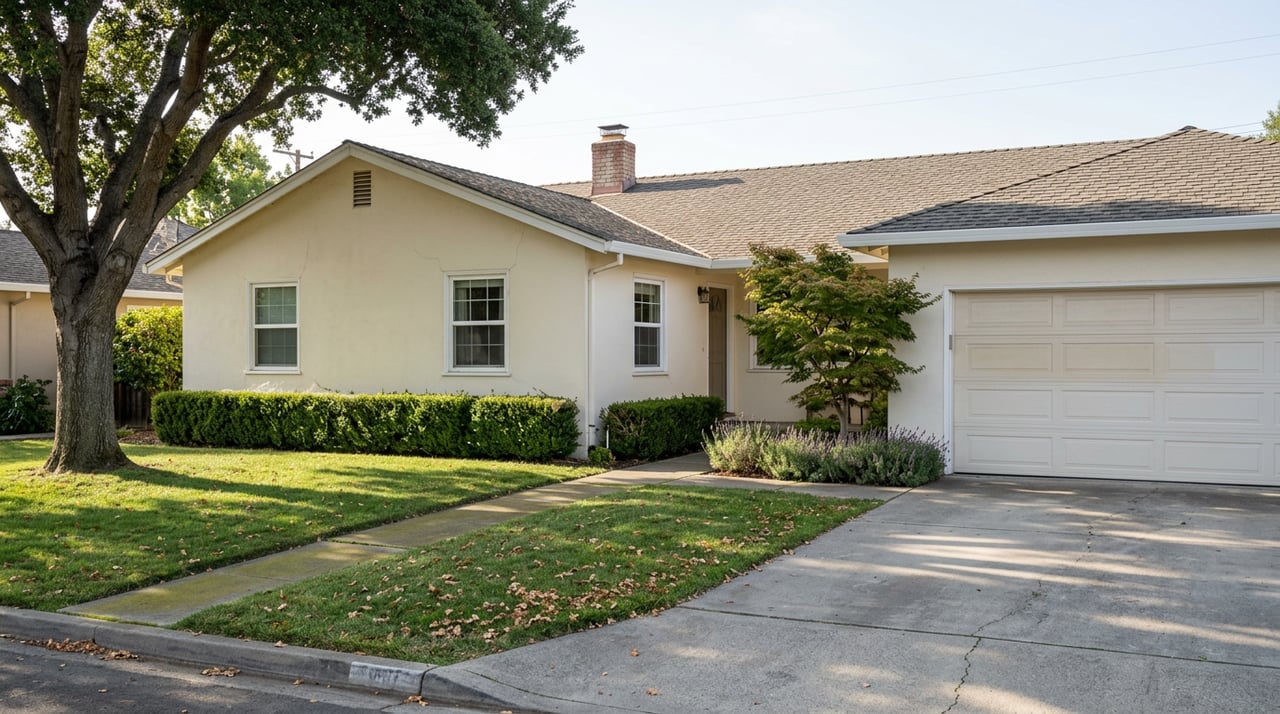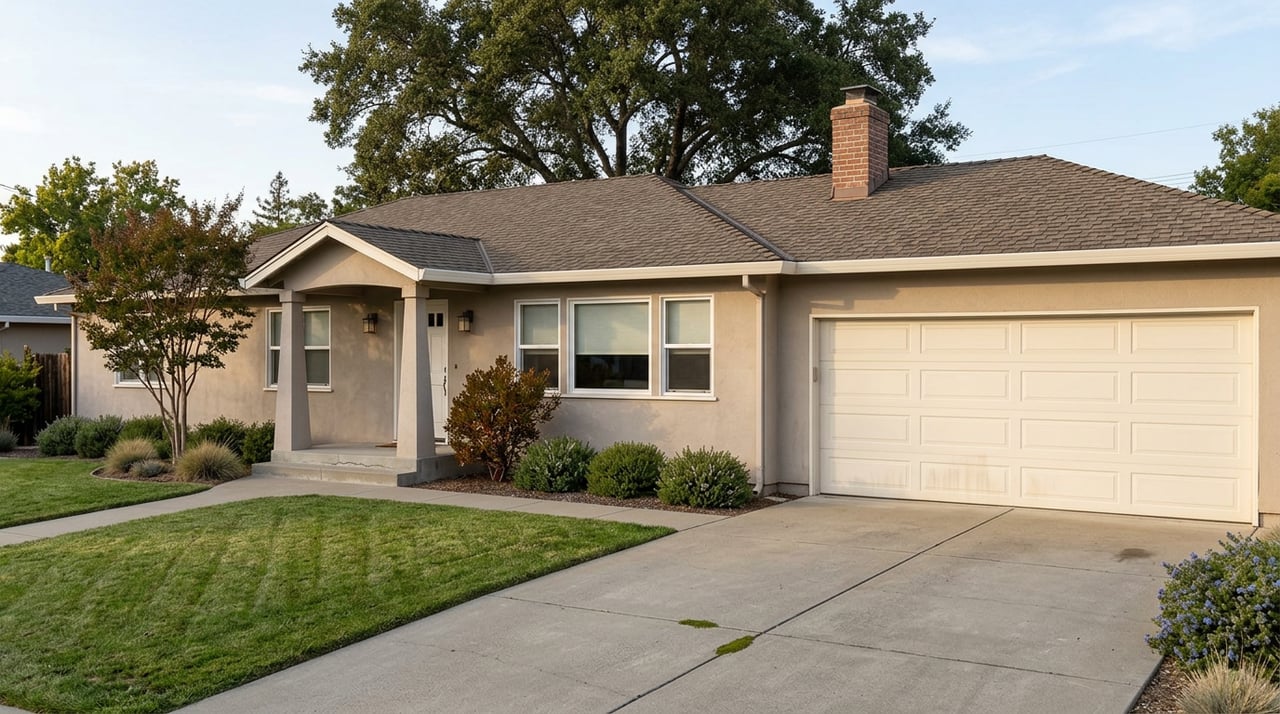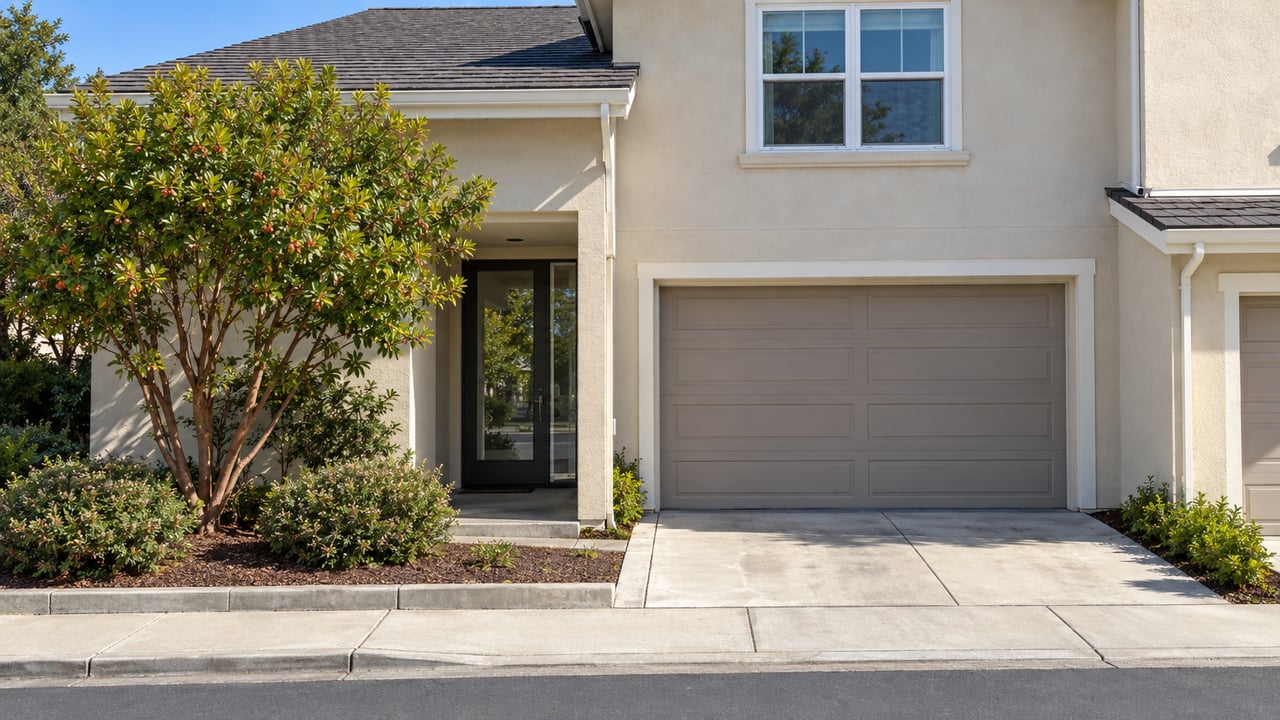
A buyer comparing two East Dublin listings this fall might reasonably assume they're looking at the same deal. Same subdivision era, same square footage, same list price within a few thousand dollars. Then the preliminary title report arrives on one of them with a line item the other doesn't have, and the monthly math changes by a few hundred dollars a month for as long as the buyer owns the house.
The assumption that trips people up isn't wrong exactly. It's just drawn at the wrong scale. Buyers in Dublin tend to think of Mello-Roos as an era question: new construction has it, older neighborhoods near the BART corridor don't. That's roughly true at the city level. It falls apart at the parcel level, because the charge doesn't follow a decade or a direction on the map. It follows the boundary of a specific Community Facilities District, drawn tract by tract, sometimes within the same subdivision.
Same Era, Same Price, Different Line Item
Dublin currently administers three of these districts: CFD No. 2015-1 for Dublin Crossing, CFD No. 2017-1 for Dublin Crossing's public services, and CFD No. 2023-1 for the East Ranch development. A fourth, CFD No. 2024-1 for Dublin Centre, has been proposed. Each one was created by its own Resolution of Formation, and each one only taxes the parcels inside the boundary that resolution drew, according to the city's own Community Facilities Districts page.
That parcel-by-parcel logic is why a listing for a home near the Alamo Creek trail, in the same general East Dublin build-out as Wallis Ranch and Positano, can be marketed with "No Mello Roos!" as a selling point. It's not an anomaly. It's the system working as designed. The developer who built that particular tract didn't need bond financing through a CFD, or the district covering it never formed one, while a Wallis Ranch or Dublin Crossing address a few streets over sits inside a district that did.
The practical version of this for a buyer: two homes built in the same five-year window, in neighborhoods that read as interchangeable on a map, are not automatically the same monthly commitment. The only way to know is to check the specific parcel, not the neighborhood name.
What the Boundary Actually Costs
Dublin Crossing, marketed as "The Boulevard," is the clearest documented case because the numbers are public. CFD No. 2015-1 levied an annual special tax of roughly $3,912 to $5,830 per single-family home in fiscal year 2024-25, with the exact figure depending on the home's size. The rate can escalate up to 2% a year, and the district is not scheduled to levy any special tax after fiscal year 2050-51. On top of that facilities charge, CFD No. 2017-1 adds a separate services tax for the same community. One documented Dublin Crossing parcel owed a combined $5,048 across both districts in fiscal year 2025-26.
Divide that by 12 and a buyer is looking at roughly $325 to $485 a month, depending on the specific home, added on top of the base 1% property tax that every California homeowner already pays under Proposition 13. That base rate typically works out to an effective tax burden of 1.1% to 1.3% of purchase price in a non-CFD Dublin home. In the CFD-heavy tracts, once the special tax is layered in, that effective rate can reach 1.5% to 1.7%.
Lenders don't treat this as optional information. Mortgage underwriters fold Mello-Roos into the same recurring housing expense bucket as property taxes and HOA dues when they calculate a buyer's debt-to-income ratio. A $3,600 annual charge adds about $300 a month to the number a lender uses to decide how much house a buyer qualifies for, on top of whatever HOA dues the same community charges. In a market where Dublin's median listing price sat at $1.39 million in September 2026, according to Movoto's tracking of local listings, that $300 a month is exactly the kind of detail that decides whether a specific offer pencils out against a buyer's approved loan amount.
Where the Line Gets Drawn Next
The East Ranch development shows how this keeps happening. The 165-acre project sits north of I-580 and east of Fallon Road, in an area that had already seen what one 2021 Patch report on the project's approval described as explosive residential growth with the completion of both Jordan Ranch and Positano. Trumark first outlined the project to the city council in 2019 and filed a formal application the following year. The approved plan called for 573 residential units, including 72 affordable units and two parks. Dublin later formed CFD No. 2023-1 specifically for that tract.
So the pattern isn't that East Dublin as a whole carries Mello-Roos while West Dublin doesn't. It's that each new master-planned phase, Dublin Crossing, then East Ranch, now the proposed Dublin Centre, gets its own district with its own boundary and its own dollar figure, layered next to older phases and infill parcels that may not carry the charge at all. A buyer comparing two similarly priced East Dublin homes five years from now will be running the same check against a different set of district numbers.
The Timing Problem
California law requires sellers to disclose Mello-Roos through the Natural Hazard Disclosure report, so the charge isn't hidden in the legal sense. The practical problem is timing. Many buyers don't see the exact dollar figure until the preliminary title report comes through during escrow, and in a competitive offer that number can arrive after contingencies have already been waived to make the offer more attractive. At that point the choices narrow: absorb a cost that wasn't in the original budget, try to negotiate a price adjustment with the seller, or walk away and risk the earnest money if no contingency protects the buyer.
Before You Write the Offer
The fix is checking the specific parcel before the offer goes in rather than after.
- Ask for the seller's current secured property tax bill and look for a line separate from the base 1% levy, usually labeled with a CFD number or district name.
- Get the parcel's APN and check it against Dublin's published list of active Community Facilities Districts rather than assuming based on the subdivision's age.
- If a CFD applies and the plan is to hold long term, ask the city's special tax consultant, Goodwin Consulting Group, for a prepayment quote on the remaining bond balance.
- Request the Resolution of Formation and Rate and Method of Apportionment for that specific parcel, since the formula, escalation clause, and end date can differ even between two CFDs in the same part of town.
None of this makes Mello-Roos a reason to avoid a neighborhood. The same charge that adds a few hundred dollars a month often funds the roads, parks, and schools, including Dublin Unified's newer Emerald High School campus, that make the newer construction desirable in the first place. The point isn't to treat the tax as a red flag. It's to treat the neighborhood name as insufficient evidence and go check the parcel.
Frequently Asked Questions
Does Mello-Roos in Dublin ever go away? Yes, once the bonds backing a district are paid off. Dublin Crossing's CFD No. 2015-1 is not scheduled to levy any special tax after fiscal year 2050-51. The city's own FAQ notes that CFD bonds typically mature over 25 to 30 years, though districts that fund ongoing services rather than one-time construction can continue indefinitely.
Is the charge tax deductible? Generally not. Mello-Roos is usually a flat parcel charge rather than a value-based one, and only the value-based portion of a property tax bill typically qualifies for the standard deduction. A narrow exception exists for the share of a special tax that funds ongoing maintenance rather than new construction, but documenting that split falls to the taxpayer. With the SALT cap raised to $40,000 for 2026, more California homeowners may reach the point where this distinction matters, which is a conversation worth having with a CPA rather than assuming either way.
Who can confirm the exact charge on a specific Dublin address? The Alameda County secured property tax bill, searchable by APN, will show any CFD line items. For questions about a district's remaining term or prepayment options, Dublin's special tax consultant, Goodwin Consulting Group, can pull the specifics for that parcel.
Reading a prelim line by line before an offer goes in is exactly the kind of work that doesn't show up in a listing photo but shows up in a monthly payment. If you're comparing two Dublin homes and want someone to pull the parcel history before you write the offer, Amir Aliloupour and the Aliloupour Real Estate Team can walk through the tax bill with you first.